Skip to content

用于 OEM 医疗设备集成的光学与电磁跟踪技术

NDI 是公认的全球领导者,也是光学与电磁跟踪技术的行业先驱。

什么是光学跟踪与电磁跟踪?

NDI 的两种技术都能以高精度跟踪手术器械,但各自具备不同的优势。

光学跟踪

了解 NDI 的光学跟踪技术如何使用红外光学跟踪器实时精确跟踪手术器械。

电磁跟踪

探索 NDI 的电磁技术如何在无需视线(line-of-sight)条件下实现 6D 跟踪。

Optical Tracking – Principles of Operation

The Polaris Vega and Polaris Lyra optical navigation solutions work by using near-infrared (IR) light to wirelessly detect and track navigation markers attached to OEM surgical instruments. They do so over a large measurement volume and with exceptional tracking accuracy and precision. Optical measurement technology is also known—and trusted—for its reliable tracking performance.

Illustration of a hand placing optical markers onto a surgical tool.

Optical markers (passive or active) are attached to surgical tools.

Illustration of an optical tracker emitting infrared light.

The Polaris® Optical Tracker floods the measurement volume with infrared (IR) light

Illustration of optical markers reflecting infrared light for tracking.

Passive markers reflect IR light emitted by the tracker, while active markers emit IR light that the tracker detects.

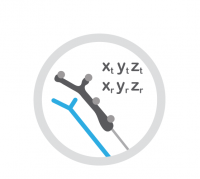
Illustration of an optical marker with its position calculated in 3D coordinates: x, y, and z.

The optical tracker detects the markers and calculates the tool’s position and orientation in 3D space.

Illustration of a surgical tool with optical markers and associated coordinates.

Coordinates are mapped to patient images, creating a real-time view of the tool’s location relative to anatomy.

Illustration of a computer displaying the spine and the position of a tracked surgical tool.

Real-time tracking data is sent to the navigation software for surgical guidance.

Electromagnetic Tracking – Principles of Operation

Aurora® electromagnetic (EM) tracking works by generating a defined EM field in which EM micro-sensors are tracked. Sensors can be embedded into OEM medical instruments such as catheters, endoscopes, guidewires, and needle tips. Using the sensors’ tracking data, the OEM image-guided surgery system can localize and visualize the instrument as it’s navigated through anatomical tracts to target and reach treatment areas.

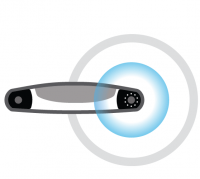
Illustration of a hand holding a medical instrument with an embedded sensor.

Sensors can be embedded into an OEM medical instrument, where they serve as localization points for the instrument in 3D space.

Illustration of a field generator emitting an electromagnetic field.

The Field Generator emits a low-intensity, varying EM field that establishes the measurement volume.

Illustration of a sensor within an electromagnetic field.

Small currents are induced inside the sensors when they enter the EM field.

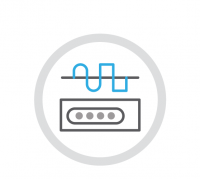
Illustration of a sensor interface unit processing signals.

These currents are relayed to the Sensor Interface Unit (SIU), where they’re amplified and digitized as signals.

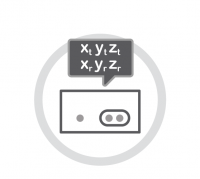
Illustration of a system control unit displaying sensor coordinates.

The signals are transmitted to the System Control Unit (SCU), which calculates each sensor’s position and orientation as a transformation.

Illustration of a computer displaying a heart model.

Tracking data are communicated to the OEM host application interface for real-time navigation of instruments relative to patient image sets.

选择合适的技术

光学跟踪

适用于器械保持可见的手术场景;即使在存在金属干扰的环境中,也能提供亚毫米级精度。

  • 4+ 种光学跟踪器配置与 3+ 种标记(marker)选项
  • 在手术与科研应用中实现亚毫米级精度
  • 面向研发的即用型工具。

电磁跟踪

适用于在体内跟踪柔性或刚性器械的应用场景(视线受遮挡时同样适用)。
  • 传感器尺寸可小至 0.3 × 2.5 mm
  • 可同时跟踪多达 32 个传感器
  • 面向研发的即插即用(Plug & Play)工具

关键差异一览:光学跟踪与电磁跟踪对比

光学跟踪电磁跟踪
视线(Line of sight)需要视线无需视线
器械类型体外刚性器械体内柔性器械
设备组成光学跟踪器与标记(markers)电子单元、磁场发生器与传感器
优势大测量空间传感器尺寸小至 0.3 × 2.5 毫米
产品线Polaris®Aurora®

Polaris® 光学产品套件

完整的 Polaris® 光学跟踪系统由两大关键组件协同工作:光学跟踪器与光学标记(markers)。

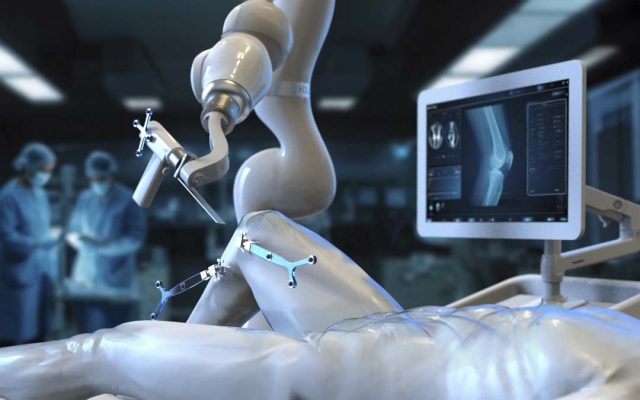
Robotic surgical arm performing a knee procedure, with a tracking reference frame on the patient’s leg and a monitor displaying knee X-ray imaging.

OEM 应用

NDI 光学技术的能力使其非常适合集成到 OEM 机器人与计算机辅助手术导航系统中,应用于颅脑、脊柱及骨科手术。

颅部

适配与颅脑相关的神经外科及神经调控手术,为 OEM 导航系统提供技术支援。

骨科学

适用于骨科手术中的 OEM 系统,可支持骨切除和植入物置入操作。

脊柱

支持用于定位与置入脊椎固定元件的 OEM 系统。

Aurora® 与 3D Guidance® 电磁产品套件

NDI 提供两种电磁跟踪平台,可根据系统与集成需求进行选择。

Aurora® 电磁产品套件

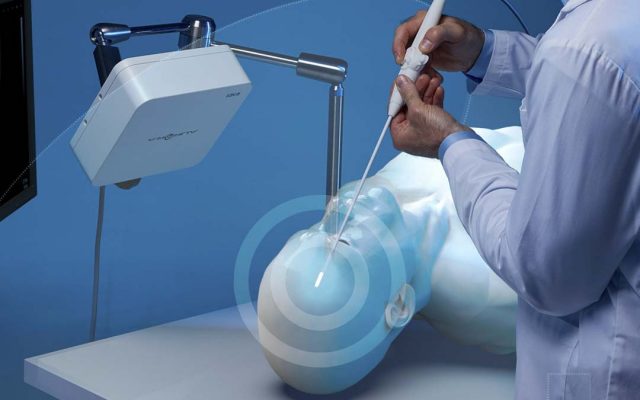
完整的 Aurora® 电磁跟踪系统由三大关键组件协同工作:电子单元(系统控制单元与传感器接口单元)、场发生器与传感器。

ENT procedure using EM field generator and probe.

3D Guidance® 电磁产品套件

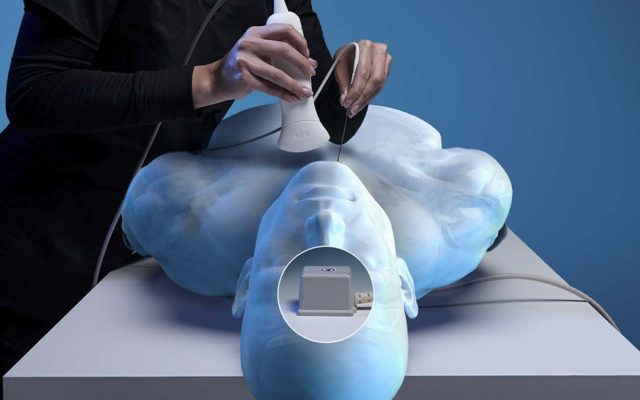
完整的 3D Guidance® 电磁跟踪系统由三大关键组件协同工作:电子单元、发射器与传感器。

EM navigated thyroid procedure using ultrasound and navigated needle.

OEM 应用

NDI 的电磁跟踪技术可提供位置与姿态数据,专为集成到 OEM 导航系统而设计,适用于包含内窥镜、导丝、导管与针尖等器械的系统。

心脏病学

NDI 电磁跟踪技术可为心脏电生理及导管介入诊疗流程中的 OEM 系统提供定位数据。

耳鼻喉科

NDI 的跟踪技术可为内窥镜和颅底手术中使用的 OEM 导航系统提供定位数据。

呼吸医学

NDI 的跟踪技术可为肺部手术(包括支气管镜检查)中使用的 OEM 导航系统提供定位数据。

泌尿学

NDI 的跟踪技术可为前列腺和泌尿外科手术中使用的 OEM 导航系统提供定位数据。

介入肿瘤学

NDI 的跟踪技术可为影像辅助介入肿瘤学诊疗流程中的 OEM 系统提供定位数据。

正在为您的医疗设备评估光学或电磁跟踪方案?

欢迎与我们的产品集成团队联系,对比 NDI 跟踪技术并为您的导航系统确定合适的配置。