Zum Inhalt springen

Optische und elektromagnetische Tracking-Technologie für die Integration medizinischer OEM-Geräte

NDI ist der anerkannte Weltmarktführer und Branchenpionier für optische und elektromagnetische Trackingtechnologie. 

Was ist optisches und elektromagnetisches Tracking?

Beide NDI-Technologien verfolgen chirurgische Instrumente mit einem hohen Maß an Genauigkeit, aber jede hat ihre eigenen Vorteile.

Optisches Tracking

Sehen Sie, wie optische Tracking-Technologie von NDI Infrarot-Tracker einsetzt, um chirurgische Instrumente in Echtzeit präzise zu verfolgen. 

Elektromagnetisches Tracking

Entdecken Sie, wie die elektromagnetische Technologie von NDI 6D-Tracking ohne Sichtverbindung ermöglicht. 

Optical Tracking – Principles of Operation

The Polaris Vega and Polaris Lyra optical navigation solutions work by using near-infrared (IR) light to wirelessly detect and track navigation markers attached to OEM surgical instruments. They do so over a large measurement volume and with exceptional tracking accuracy and precision. Optical measurement technology is also known—and trusted—for its reliable tracking performance.

Illustration of a hand placing optical markers onto a surgical tool.

Optical markers (passive or active) are attached to surgical tools.

Illustration of an optical tracker emitting infrared light.

The Polaris® Optical Tracker floods the measurement volume with infrared (IR) light

Illustration of optical markers reflecting infrared light for tracking.

Passive markers reflect IR light emitted by the tracker, while active markers emit IR light that the tracker detects.

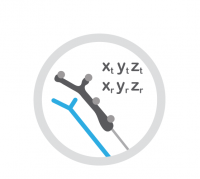
Illustration of an optical marker with its position calculated in 3D coordinates: x, y, and z.

The optical tracker detects the markers and calculates the tool’s position and orientation in 3D space.

Illustration of a surgical tool with optical markers and associated coordinates.

Coordinates are mapped to patient images, creating a real-time view of the tool’s location relative to anatomy.

Illustration of a computer displaying the spine and the position of a tracked surgical tool.

Real-time tracking data is sent to the navigation software for surgical guidance.

Electromagnetic Tracking – Principles of Operation

Aurora® electromagnetic (EM) tracking works by generating a defined EM field in which EM micro-sensors are tracked. Sensors can be embedded into OEM medical instruments such as catheters, endoscopes, guidewires, and needle tips. Using the sensors’ tracking data, the OEM image-guided surgery system can localize and visualize the instrument as it’s navigated through anatomical tracts to target and reach treatment areas.

Illustration of a hand holding a medical instrument with an embedded sensor.

Sensors can be embedded into an OEM medical instrument, where they serve as localization points for the instrument in 3D space.

Illustration of a field generator emitting an electromagnetic field.

The Field Generator emits a low-intensity, varying EM field that establishes the measurement volume.

Illustration of a sensor within an electromagnetic field.

Small currents are induced inside the sensors when they enter the EM field.

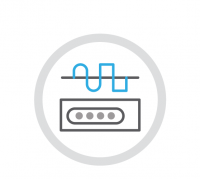
Illustration of a sensor interface unit processing signals.

These currents are relayed to the Sensor Interface Unit (SIU), where they’re amplified and digitized as signals.

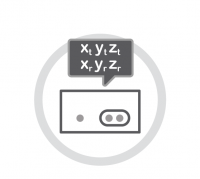
Illustration of a system control unit displaying sensor coordinates.

The signals are transmitted to the System Control Unit (SCU), which calculates each sensor’s position and orientation as a transformation.

Illustration of a computer displaying a heart model.

Tracking data are communicated to the OEM host application interface for real-time navigation of instruments relative to patient image sets.

Die Wahl der richtigen Technologie

Optisches Tracking

Ideal für Verfahren, wobei Instrumente sichtbar bleiben; bietet Submillimetergenauigkeit selbst in Umgebungen mit Metallinterferenzen.

  • Über 4 optische Tracker-Konfigurationen und über 3 Marker-Optionen
  • Submillimetergenauigkeit bei Chirurgie- und Forschungsanwendungen
  • Gebrauchsfertige Tools für Forschung und Entwicklung.

Elektromagnetisches Tracking

Ideal für die Verfolgung flexibler oder starrer Instrumente im Körper, wenn die Sichtverbindung unterbrochen ist. 

  • Kleine Sensoren von bis zu 0,3 × 2,5 mm
  • Bis zu 32 Sensoren gleichzeitig verfolgen
  • Plug & Play-Tools für Forschung und Entwicklung verfügbar

Die wichtigsten Unterschiede auf einen Blick: Optisches und elektromagnetisches Tracking im Vergleich

Optisches TrackingElektromagnetisches Tracking
SichtverbindungSichtverbindung erforderlich Keine Sichtverbindung erforderlich
InstrumententypExterne starre Instrumente Interne flexible Instrumente 
AusrüstungOptische Tracker & Marker Elektronische Einheiten, Feldgeneratoren & Sensoren 
VorteileGroßes MessvolumenSensoren mit Abmessungen von nur 0,3 × 2,5 mm
ProduktliniePolaris®Aurora®

Die optische Polaris® Produktreihe

Das komplette Polaris® Optical Tracking System basiert auf zwei Hauptkomponenten, die zusammenarbeiten: einem optischen Tracker und optischen Markern. 

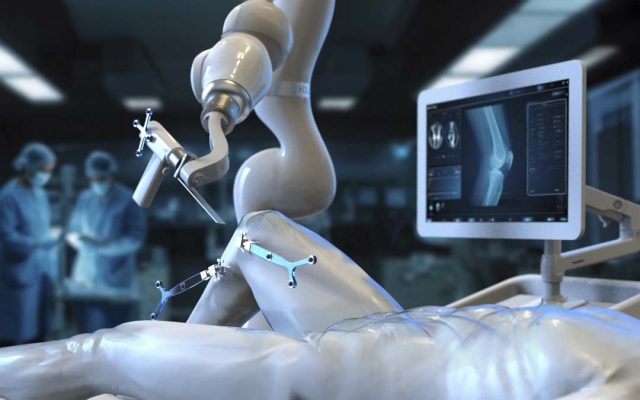
Robotic surgical arm performing a knee procedure, with a tracking reference frame on the patient’s leg and a monitor displaying knee X-ray imaging.

OEM-Anwendungen

Die Fähigkeiten der optischen Technologie von NDI sind ideal für die Integration in OEM-Roboter und computergestützte chirurgische Navigationssysteme in der Schädel-, Wirbelsäulen- und orthopädischen Chirurgie.

Kranial

Unterstützt OEM-Systeme, die bei neurochirurgischen und neuromodulatorischen Eingriffen an Gehirn und Schädel eingesetzt werden.

Orthopädie

Unterstützt OEM-Systeme, die bei orthopädischen Eingriffen mit Knochenresektion und Implantatinsertion zum Einsatz kommen.

Spinal

Unterstützt OEM-Systeme, die für die Positionierung und Platzierung von Wirbelsäulenstabilisierungsimplantaten eingesetzt werden.

Die elektromagnetische Produktreihe Aurora® und 3D Guidance®

NDI bietet zwei elektromagnetische Tracking-Plattformen an, je nach System und Integrationsanforderungen.

Die elektromagnetische Aurora® Produktreihe

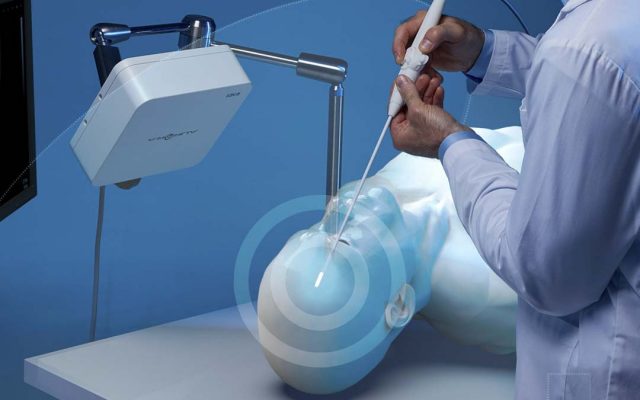
Das elektromagnetische Trackingsystem Aurora® basiert auf drei Hauptkomponenten: Elektronikeinheiten (Systemsteuerung + Sensorschnittstelle), Feldgenerator und Sensoren. 

ENT procedure using EM field generator and probe.

Die elektromagnetische 3D Guidance® Produktreihe

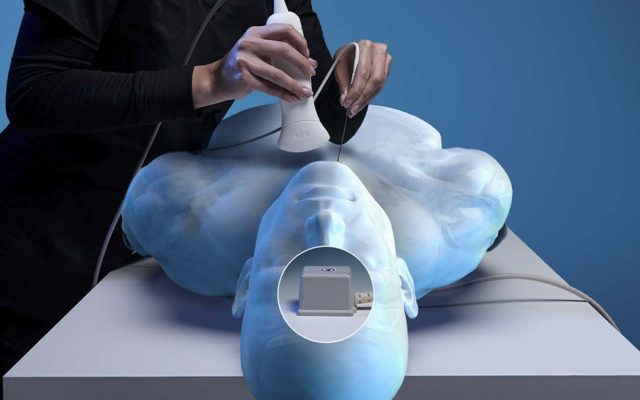
Das elektromagnetische Messsystem 3D Guidance® basiert auf drei Hauptkomponenten: einer Elektronikeinheit, einem Transmitter und Sensoren.

EM navigated thyroid procedure using ultrasound and navigated needle.

OEM-Anwendungen

Die elektromagnetische Trackingtechnologie von NDI stellt Positions- und Orientierungsdaten bereit, die in OEM-Navigationssysteme mit Instrumente wie Endoskopen, Führungsdrähten, Kathetern und Nadelspitzen integriert werden.

Kardiologie

Die elektromagnetische Messtechnologie von NDI liefert Positionsdaten für OEM-Systeme, die in der kardialen Elektrophysiologie und bei kathetergestützten interventionellen Arbeitsabläufen eingesetzt werden.

Hals-Nasen-Ohren

Die Messtechnologie von NDI liefert Positionsdaten für OEM-Navigationssysteme, die bei endoskopischen Eingriffen und Eingriffen an der Schädelbasis zum Einsatz kommen.

Pulmologie

Die Messtechnologie von NDI liefert Positionsdaten für OEM-Navigationssysteme, die bei pulmonologischen Eingriffen einschließlich Bronchoskopie zum Einsatz kommen.

Urologie

Die Messtechnologie von NDI liefert Positionsdaten für OEM-Navigationssysteme, die bei Prostata- und urologischen Eingriffen zum Einsatz kommen.

Interventional Oncology

Die Messtechnologie von NDI liefert Positionsdaten für OEM-Systeme, die in bildgesteuerten interventionellen onkologischen Arbeitsabläufen eingesetzt werden.

Optisches oder elektromagnetisches Tracking für Ihr Medizingerät?

Kontaktieren Sie unser Produktintegrationsteam, um NDI-Tracking-Technologei zu vergleichen und die passende Konfiguration für Ihr Navigationssystem zu identifizieren.