



The Challenge: Precision in a Complex Environment
- Limited visibility in minimally invasive approaches
- Dependence on radiation-based imaging for guidance
- Physiological motion, such as breathing and tissue interaction
- Difficulty maintaining precision in dynamic environments
- Relying on non-real-time imaging and tactile feedback.
| Challenge | Consequence |
|---|---|
| Blind drilling or 2D fluoroscopy | Sub-optimally placed pedicle screw |
| Intraoperative CT / X-ray | Significant radiation exposure |
| Patient breathing & movement | Registration errors, screw misplacement |
A Unified Workflow: Multi-Robot Coordination with Optical Tracking
The system combines ultrasound imaging, robotic positioning, surgical planning, and drilling functions in a seamless loop, with NDI’s optical tracking supporting the workflow at key moments:
- Initial surface reconstruction
- Automatic registration of CT plans to ultrasound images
- Real-time motion tracking during drilling
- Dynamic adaptation based on optical marker feedback
The ULTRATOPIA platform is designed to explore workflows that reduce reliance on intraoperative fluoroscopy. The system is engineered to enable minimally invasive workflows without compromising accuracy, aiming for the following clinical benchmarks:
- Drilling Success Rate: ≥90%
- Linear Precision: ≃ 1 mm
- Angular Accuracy: ≃ 1°
This synergy between advanced robotics and high-precision optical tracking sets a new standard for safety and reliability in spinal interventions.
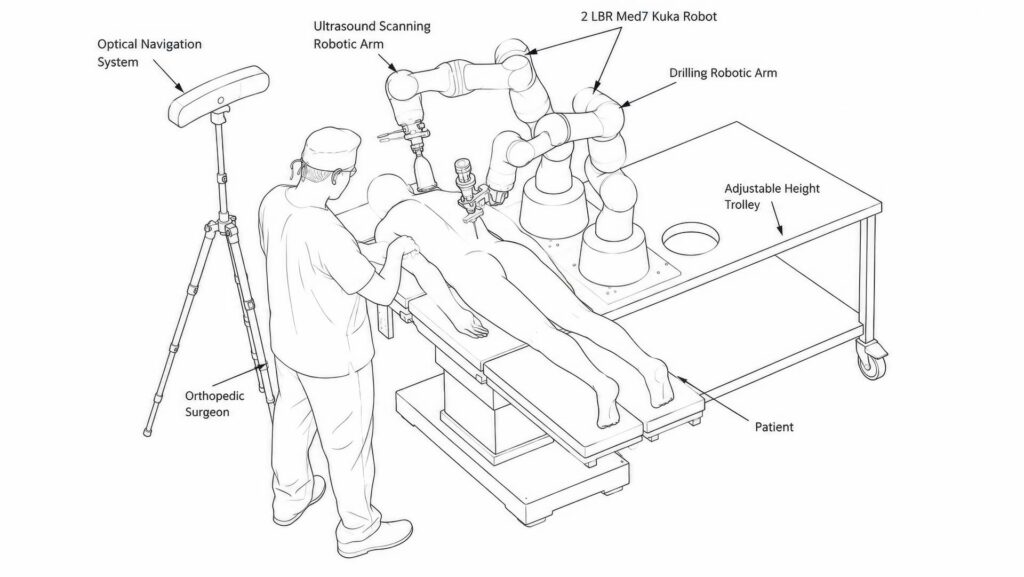
Diagram 1: Workflow Architecture of Team Ultratopia’s Robotic Spine Surgery System
Disclaimers
Testimonials in this case study reflect the speakers’ experience with the ULTRATOPIA research platform incorporating NDI tracking components. Outcomes are determined by the research system design, integration choices, and clinical protocol, not by NDI components in isolation
The Polaris Vega® VT is a general metrology product and is not approved, cleared, or developed for medical use. Suitability of this product in a particular application must be determined by the OEM customer or the end user. Clinical applications shown are representative OEM integrations completed by Team ULTRATOPIA. NDI Passive Spheres are FDA-regulated medical devices.
About KU Leuven’s Team Ultratopia
Team Ultratopia is part of the Robot-Assisted Surgery (RAS) group at KU Leuven, in collaboration with Balgrist University Hospital (University of Zurich). Their research spans robotic ultrasound, AI-based navigation, multi-robot surgical systems, and preclinical validation. Their original project proposal underpins this case study.
About NDI
NDI is a global leader in optical and electromagnetic tracking technologies, including the Polaris Vega®, trusted for its speed, accuracy, and reliability when integrated into OEM medical device navigation systems. The company has over 40 years of experience enabling robotic and image-guided systems. Precisely. It’s our way and your advantage.
About KUKA
KUKA is a global leader in intelligent automation with over 124 years of experience across multiple sectors. In its medical partnerships, KUKA uses the LBR Med, a seven-axis lightweight robot designed specifically for healthcare applications. Its adaptability enables seamless integration into medical devices for complex surgical environments.