



Optical Tracking for Spine Navigation and Robotic Surgery
As spine surgery advances toward robotic-assisted workflows and minimally invasive approaches, OEMs are building navigation systems that require sub-millimetre accuracy across increasingly complex procedures. Polaris® Optical tracking provides real-time data that supports computer-assisted and robotic spine navigation for open fusion, Minimally Invasive Spinal (MIS) fusion, and deformity correction.
OEM Navigation, Robotics, and ASC Workflows with
Polaris® Optical Tracking
Polaris provides the real-time positional data that connects pre-operative planning, intraoperative tracking, and system-level feedback inside OEM spine navigation and robotic workflows.
Exceptional Precision
Sub-millimetre accuracy designed to provide positional data for OEM spine navigation systems supporting bone preparation and pedicle screw placement workflows.
High-Speed Tracking
Low-latency performance designed for real-time coordination of spine robotic systems and intraoperative imaging.
Large Volume Tracking
Tracking volume designed to support flexible OR setups and maintain visibility of instruments, reference frames, and robotic components throughout spine procedures.
Trusted by OEMs Building the Next Generation of Navigation
Real stories from the people who make NDI exceptional.
Disclaimer: Individual customer experience. Results may vary based on OEM system and clinical application.
I appreciate NDI’s reliable quality system and proactive support for our R&D and sales activities. I look forward to achieving even more advanced technology that is better suited for our robotics through mutual efforts in the future.”
Jun Lee
CEO, Curexo Inc.
Robotic-Assisted Spine Navigation
Polaris integrates into OEM robotic spine systems to provide high-speed instrument, anatomy, imaging, and robotic component tracking, supporting OEM system workflows for pedicle screw trajectory execution, multi-level construct planning, and robotic arm coordination.
What Polaris tracks in Robotic-Assisted Spine Navigation:
Robotic Components
Polaris tracks the robotic base and end-effector in real-time, providing positional feedback for robotic path planning and guided pedicle screw placement.
Surgical Instruments
Surgical drills, probes, and screw drivers are tracked to support real-time navigation guidance during vertebral preparation and screw insertion.
Patient Reference Frames
Imaging Devices
Intraoperative imaging systems (CT, O-arm, 3D C-arm) are tracked to maintain registration and alignment verification.
Recommended Products
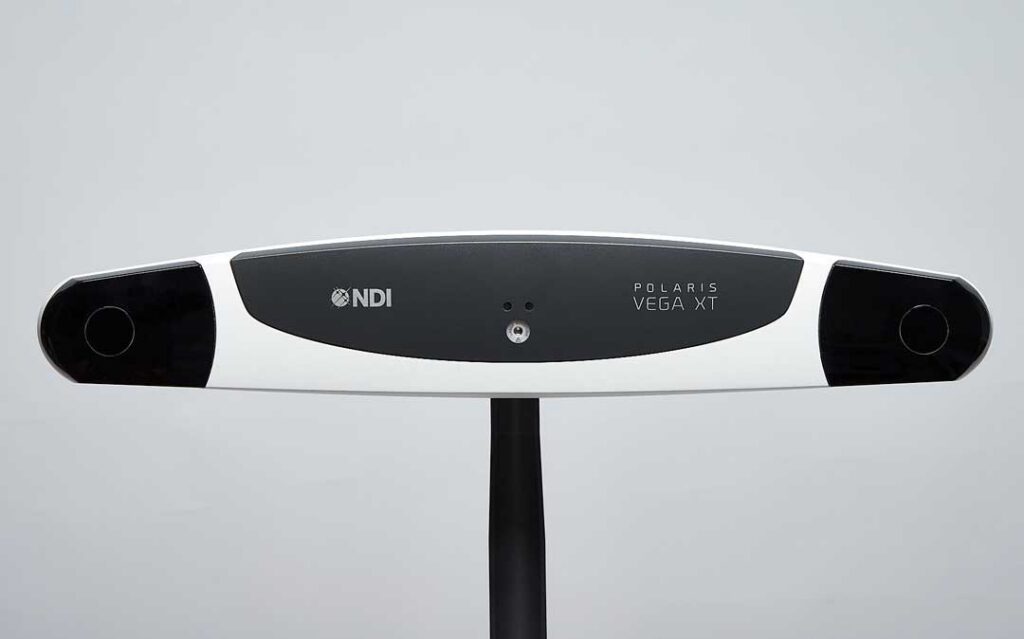
Polaris Vega® XT
High-speed, low-latency Optical tracking with sub-millimetre accuracy over a large measurement volume. Designed for multi-component robotic workflows requiring simultaneous tracking of robotic arms, instruments, reference frames, and imaging devices.
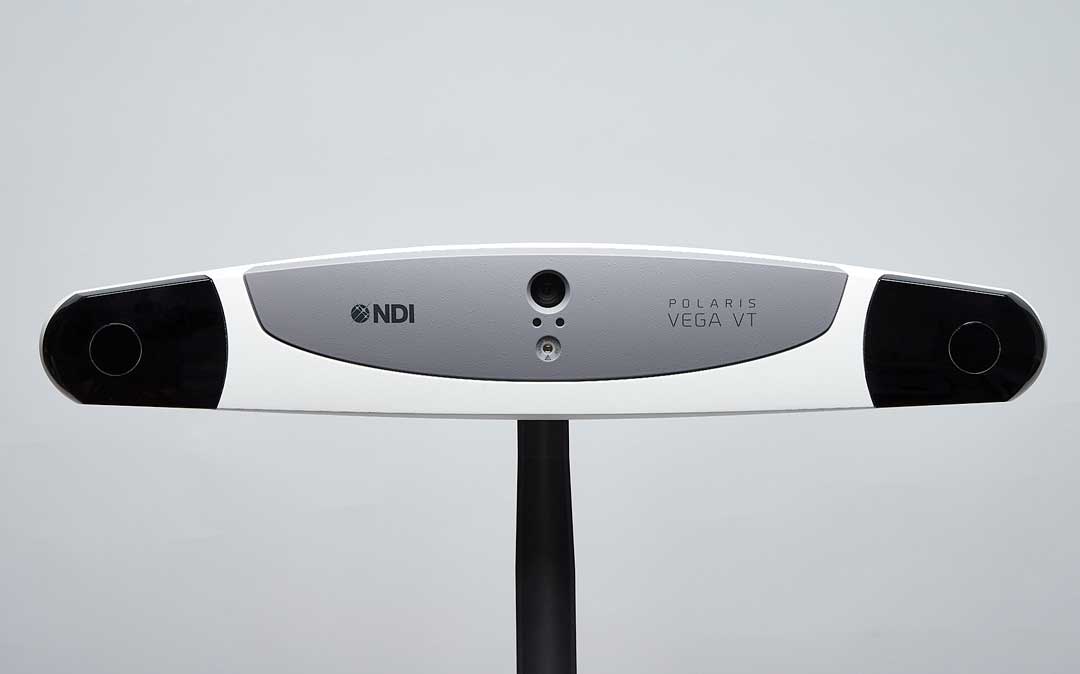
Polaris Vega® VT
Optical tracking with integrated HD video. Supports visualization workflows and augmented reality overlays alongside real-time position tracking for robotic-assisted spine navigation.
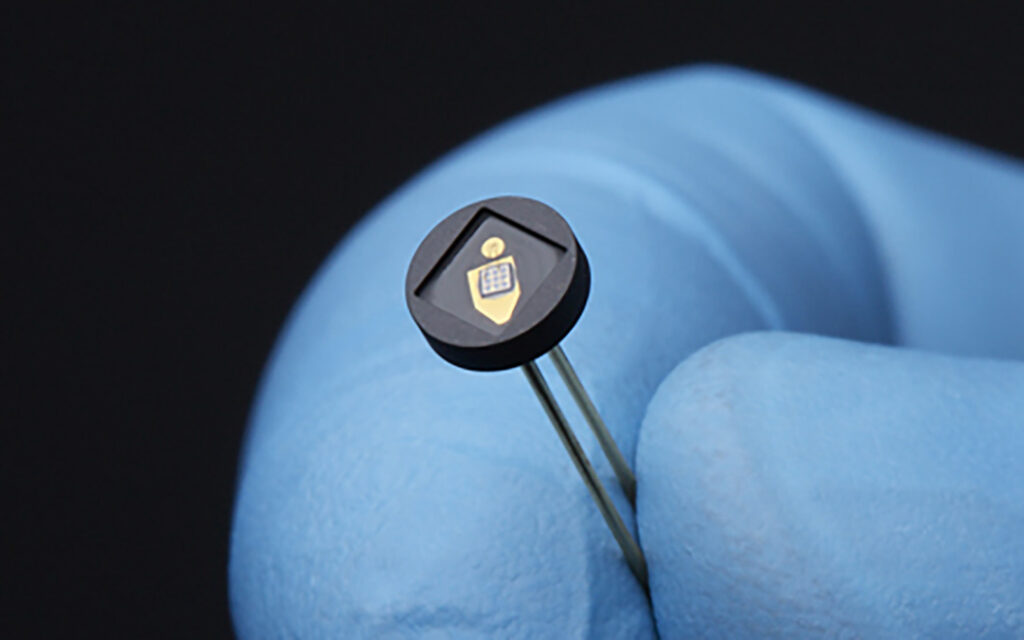
Polaris IRED Active Markers
Reusable, low-profile active markers for tracking robotic bases and end-effectors. Maintain visibility under surgical draping during spine procedures.
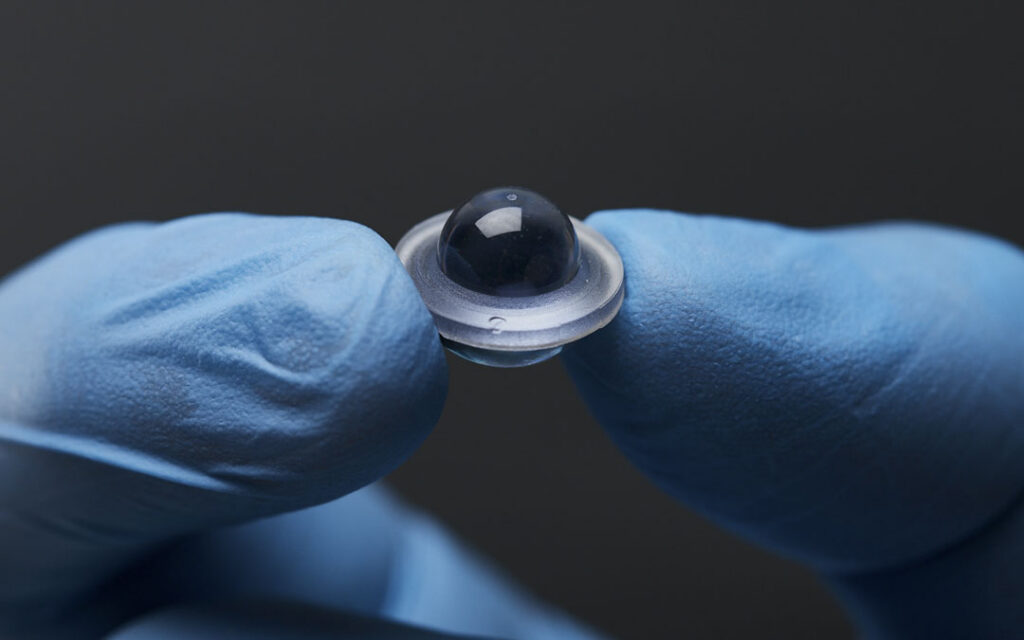
Polaris Radix™ Lens
Wipeable, retro-reflective passive markers. Resist contamination from blood and bone debris.
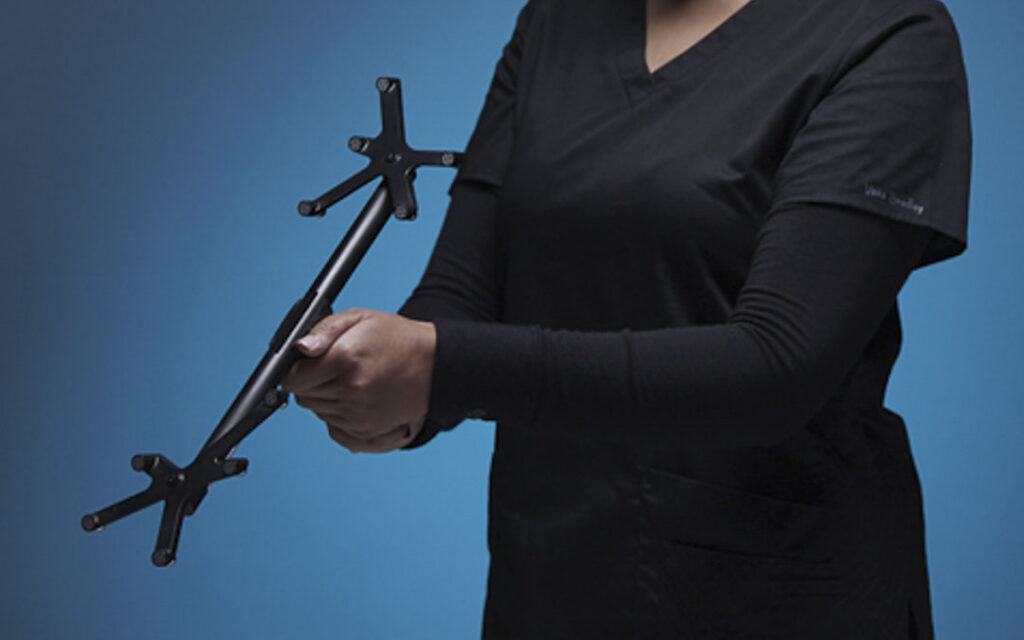
Polaris Accuracy Assessment Kit™ (AAK)
Portable, on-demand accuracy verification for Polaris Optical Trackers. Supports routine accuracy checks on the manufacturing floor, in clinical environments, or in research settings.
Polaris Computer-Assisted Spine Navigation
Polaris integrates into OEM spine navigation systems to provide real-time instrument and anatomy tracking, supporting vertebral registration, navigated instrument guidance, and implant positioning workflows.
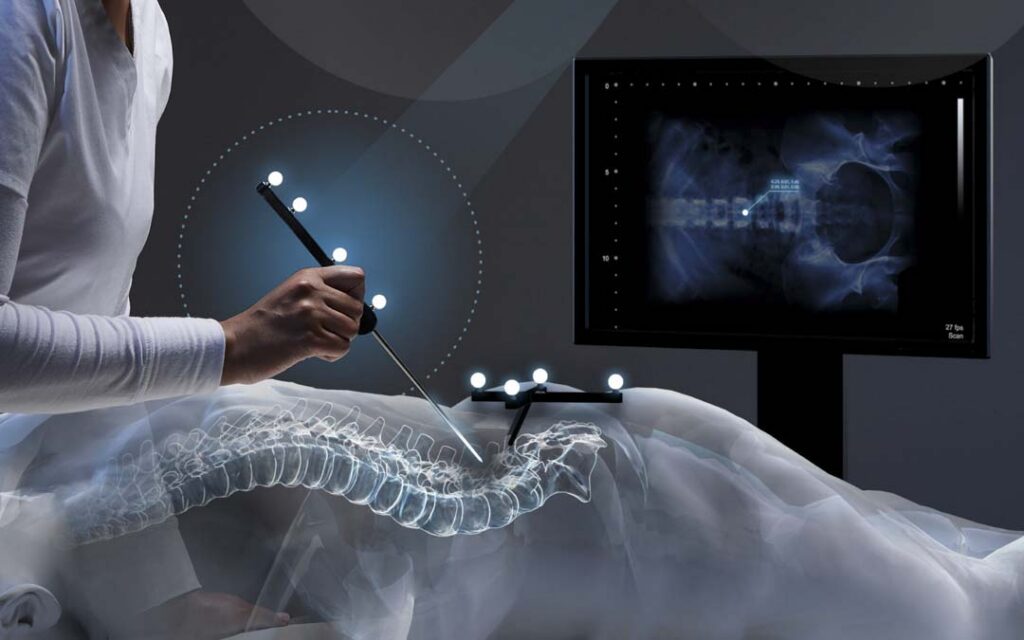
What Polaris Tracks in Computer-Assisted Spine Navigation:
Surgical Instruments
Polaris tracks surgical drills, probes, and screw drivers in real-time, providing positional data that OEM navigation systems use within their pedicle screw trajectory and placement workflows.
Patient Reference Frames
Reference frames attached to vertebral anatomy provide a fixed coordinate frame. Polaris tracks these to maintain spatial registration between the patient and the navigation system throughout the case.
Imaging Devices
Polaris tracks the spatial relationship between intraoperative imaging systems (CT, O-arm, 3D C-arm) and patient anatomy, supporting registration and alignment verification.
Recommended Products
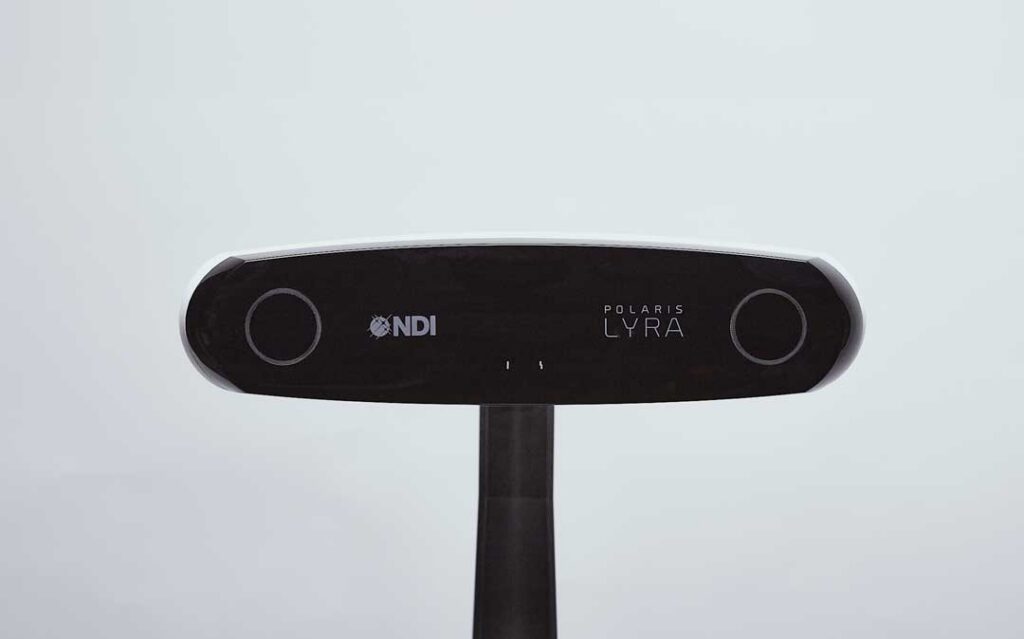
Polaris Lyra®
Compact, cart- or bed-mountable Optical Tracker. Sub-millimetre accuracy in a form factor designed for ASC and space-constrained OR environments.
Polaris Radix™ Lens
Wipeable, retro-reflective passive markers. Resist contamination from blood and bone debris during bone resection and implant placement.
Polaris Accuracy Assessment Kit™ (AAK)
Portable, on-demand accuracy verification for Polaris Optical Trackers. Supports routine accuracy checks on the manufacturing floor, in clinical environments, or in research settings.
Building a Next-Generation Spine Navigation System?
Connect with our Product Integration team to identify the right Polaris tracking configuration
for your navigation or robotic system architecture.
Frequently Asked Questions: Optical Tracking for Spine Navigation
Why does tracking matter in spine surgery?
Spine surgery requires millimetre-level tolerances for pedicle screw placement, where positional accuracy is a key technical parameter that OEM navigation systems specify and validate within their finished device design. Continuous tracking data is one input that OEM systems use to support real-time positional feedback within their validated system architecture. As robotic-assisted spine surgery adoption grows, procedures shift to ambulatory surgery centres, and constructs become more complex (multi-level, deformity, MIS), OEMs face increasing demands for higher accuracy, lower latency, contamination-resistant markers, intraoperative imaging integration, and compact system designs. These requirements make the choice of tracking technology a foundational decision in spine navigation and robotic platform development.
What types of spine procedures does NDI optical tracking support?
NDI Polaris optical tracking supports OEM development of navigation and robotic systems for open spinal fusion (TLIF, PLIF), minimally invasive spine fusion (MIS), deformity correction (scoliosis, kyphosis), and trauma fixation. Navigation is primarily used in procedures involving pedicle screw placement and spinal stabilization hardware.
Which NDI products are recommended for robotic spine navigation?
For robotic spine workflows, NDI recommends the Polaris Vega XT for sub-millimetre tracking across a large measurement volume. Polaris IRED Active Markers support tracking of robotic bases and end-effectors under surgical draping, and Polaris Radix Lens markers resist contamination during drilling and screw placement.
Which NDI products are recommended for computer-assisted spine navigation?
For computer-assisted spine navigation, NDI recommends the Polaris Lyra for its compact, bed-mountable design and sub-millimetre accuracy, paired with Polaris Radix Lens markers. This configuration is designed for ASC and space-constrained OR environments.
How does NDI optical tracking integrate with intraoperative imaging in spine surgery?
Polaris optical tracking provides real-time position data that supports registration and alignment with intraoperative imaging systems including CT, O-arm, and 3D C-arm. The tracking system coordinates the spatial relationship between imaging data, patient anatomy, and surgical instruments throughout the procedure.
How does NDI optical tracking perform in ambulatory surgery centre (ASC) environments?
The Polaris Lyra was designed for compact OR environments. Its bed-mountable form factor reduces footprint, supports fast setup, and delivers the sub-millimetre accuracy required for navigated pedicle screw placement in ASC settings.
Are NDI tracking markers resistant to contamination during spine procedures?
Yes. Polaris Radix Lens markers are wipeable, retro-reflective markers engineered to resist contamination from blood and bone debris during drilling and pedicle screw placement. This contamination resistance helps maintain tracking visibility and reliability throughout spine procedures.
Can NDI optical tracking support multi-level spine constructs?
Yes. The Polaris Vega XT provides stable, sub-millimetre tracking across a large measurement volume, supporting multi-level spine constructs where accuracy must be maintained across many vertebral levels. The system tracks robotic arms, instruments, reference frames, and imaging devices simultaneously throughout complex multi-level procedures.
What is the Polaris Accuracy Assessment Kit (AAK)?
The Polaris AAK is a portable kit that enables on-demand verification of Polaris optical tracker accuracy. It supports routine accuracy checks on the manufacturing floor, in clinical environments, or in research settings, helping maintain sub-millimetre confidence for precision-critical spine procedures.
Can NDI support both optical and electromagnetic tracking for spine applications?
NDI provides both Polaris optical tracking and Aurora electromagnetic tracking technologies. For spine navigation and robotic-assisted surgery, Polaris optical tracking is the recommended technology due to its sub-millimetre accuracy and suitability for tracking instruments and robotic components in surgical environments. Aurora electromagnetic tracking is used in applications where line of sight is obstructed.