



Electromagnetic Tracking for Pulmonary Navigation
As pulmonology shifts toward peripheral lung access and robotic bronchoscopy, OEMs are integrating Electromagnetic (EM) tracking to localize instruments beyond the endoscopic field of view. Aurora® EM tracking from NDI provides continuous, real-time position and orientation data that supports advanced navigation workflows for biopsy, ablation, and robotic-guided procedures.
OEMs Extend Navigation Beyond the Endoscopic Field of View with Aurora®
Aurora provides the real-time localization layer that connects pre-procedure CT imaging, 3D anatomical mapping, and continuous instrument tracking inside OEM-integrated pulmonology workflows.
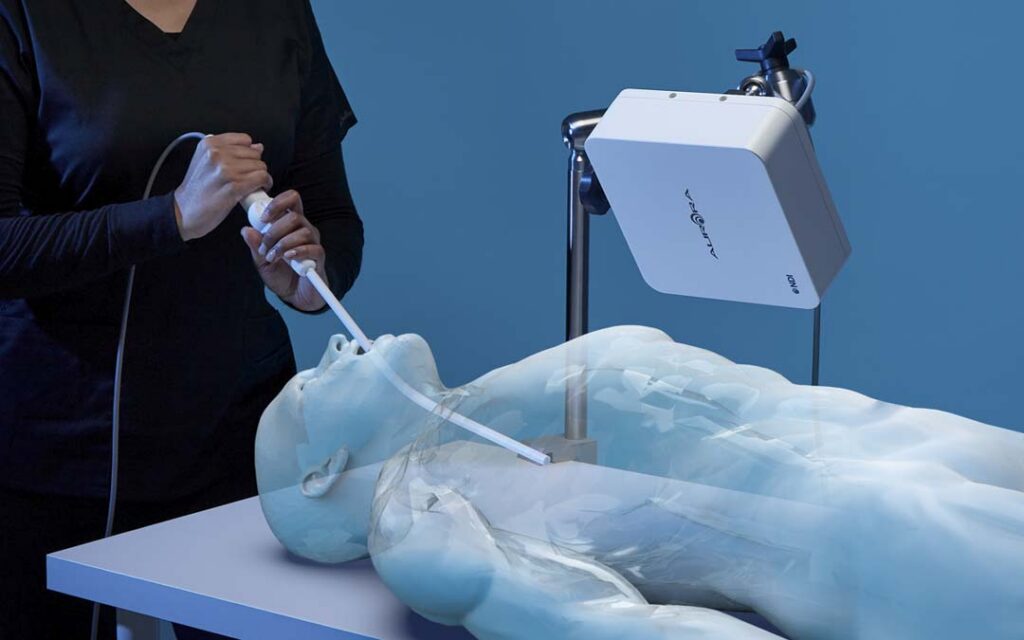
CT-Guided Navigation
From Pre-Procedure Imaging to Real-Time Tracking. Aurora EM tracking supports the use of pre-procedure CT imaging as a 3D anatomical reference within OEM-integrated navigation systems. This enables continuous alignment between the CT roadmap and real-time instrument position throughout the procedure.
Instrument-to-Lesion Localization
Real-Time Position Data Beyond the Scope. Aurora provides continuous positional data for instrument tips relative to CT-derived anatomical structures. When the bronchoscope can no longer visualize the target, EM tracking continues to provide positional data for the instrument relative to CT-derived anatomy.
Robotic and Navigation System Feedback
EM Data for Platform-Level Integration. Aurora supplies real-time location data that robotic and navigation platforms can use for system-level feedback and control. OEMs can integrate EM tracking as an independent localization layer within their own system architecture.
Electromagnetic Tracking for Pulmonology
Aurora integrates into OEM pulmonology systems to provide real-time instrument localization across robotic, bronchoscopic, and catheter-based workflows. (Representative OEM Devices: Examples shown are representative of common OEM integrations.)
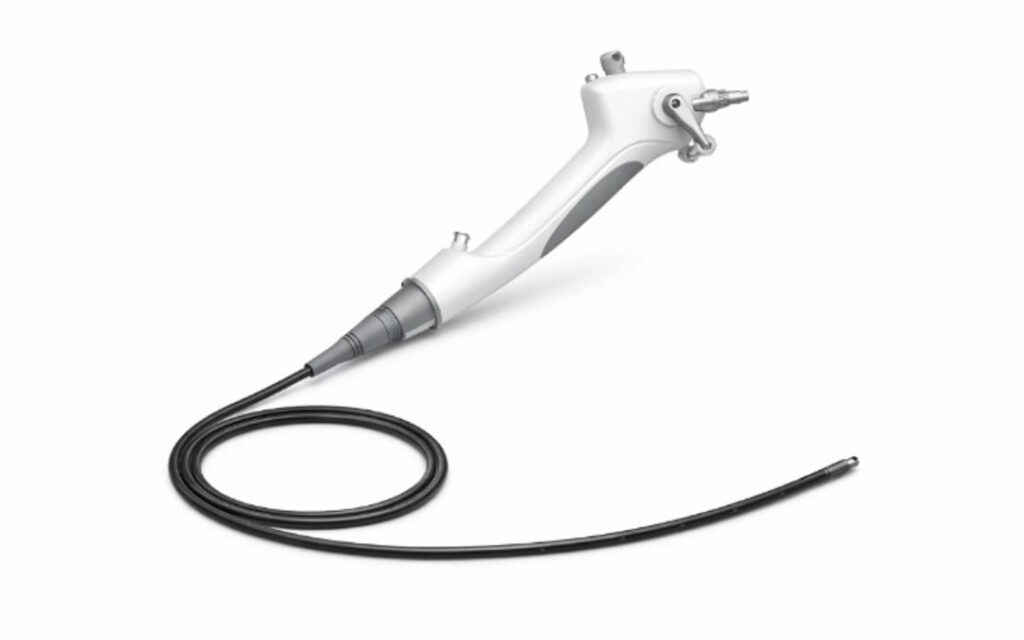
Bronchoscope (Manual or Robotic)
In OEM systems, an EM sensor near the distal tip tracks the bronchoscope’s position and orientation beyond the point where camera visualization ends, supporting navigation to peripheral lung targets.
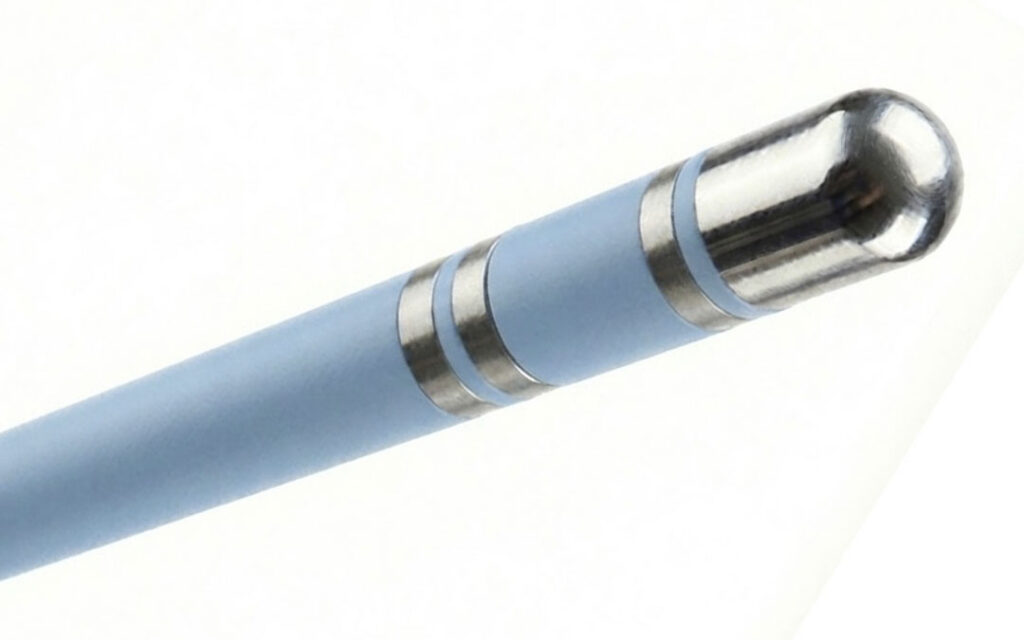
Biopsy and Ablation Catheters
In OEM systems, EM tracked catheters can be used to provide position data for precise targeting confirmation.
Recommended Products
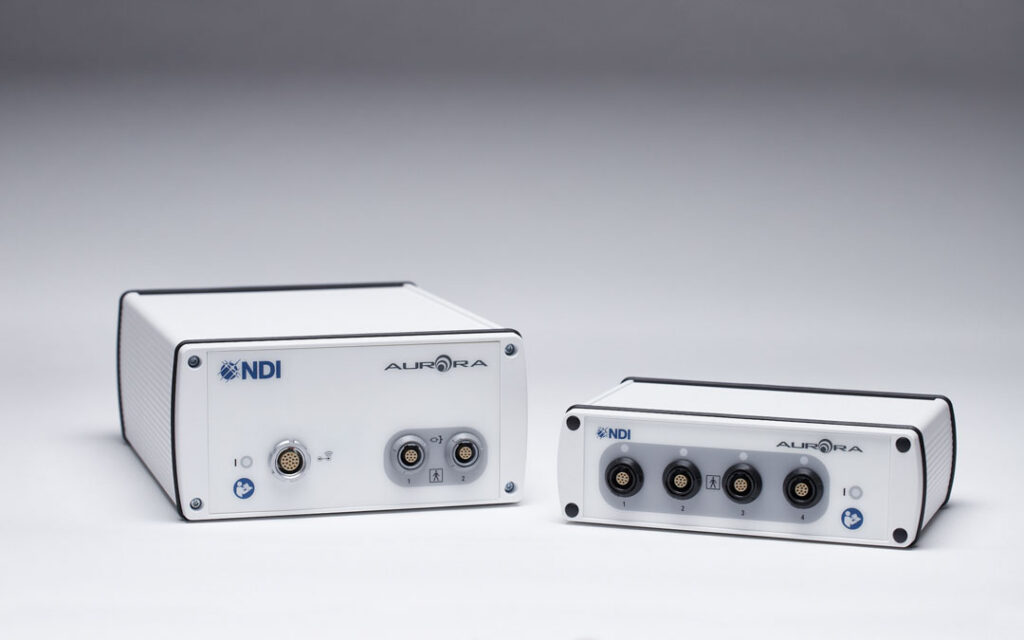
Aurora Electronics Units
Designed for integration into systems operating in complex C-arm workflows, offering high accuracy and a versatile range of configuration options.
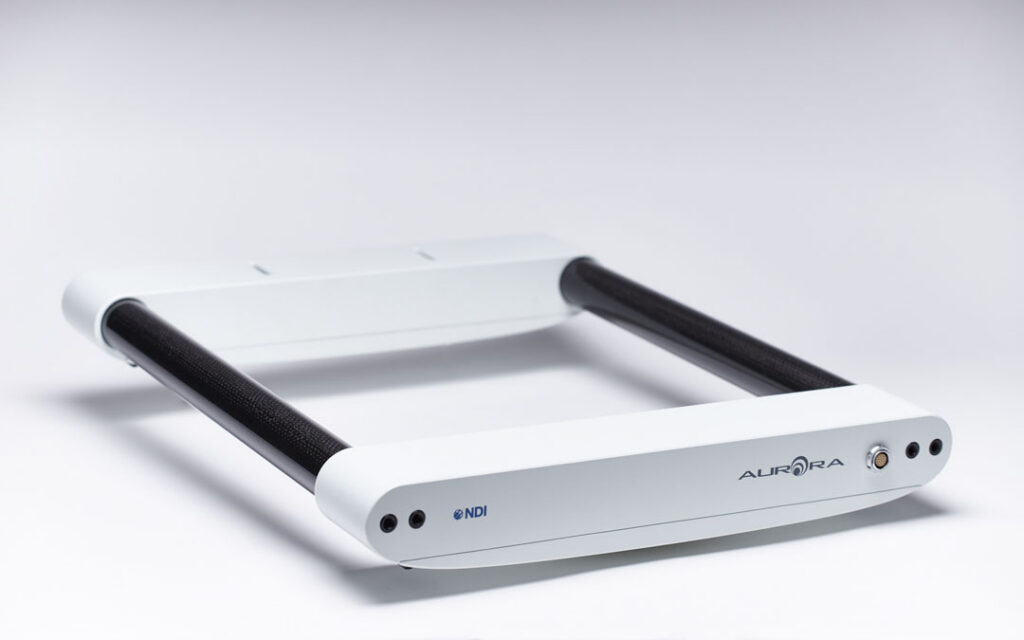
Aurora Window 50-60 Field Generator
Mounts under the patient table and out of sight during C-arm imaging. Accurate tracking is maintained without the introduction of imaging artefacts.
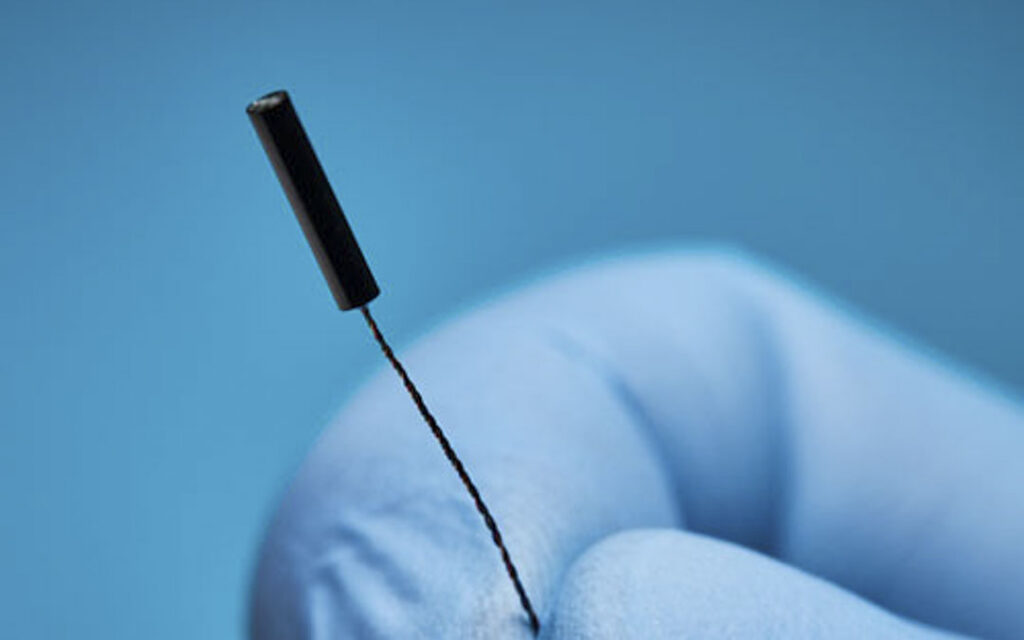
Bronchoscope sensors (manual or robotic)
Popular Choice: 6DOF Solid Sensor
Facilitates rotation tracking for an bronchoscope that navigates difficult structures where rotation tracking is needed.
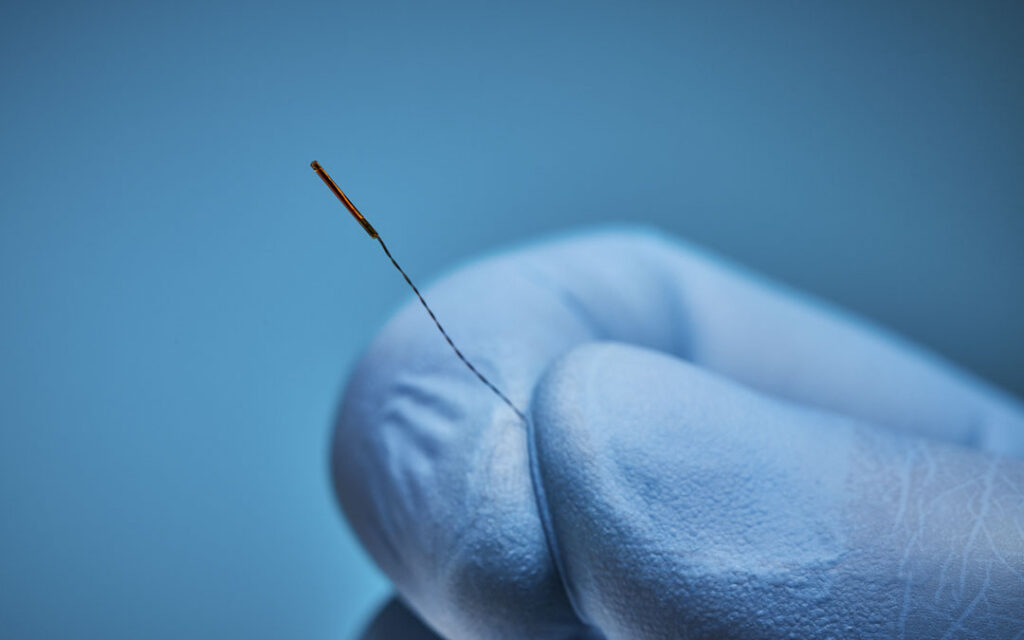
Biopsy and Ablation Catheter Sensors
Popular Choice: 5DOF Solid Sensor
Withstands high-voltage ablation environments while maintaining accurate tracking.
Developing a Pulmonary Navigation or Robotic Bronchoscopy System?
Connect with our Product Integration team to identify the right Aurora tracking configuration for your navigation platform.
Frequently Asked Questions: Electromagnetic Tracking for Pulmonology
Why does tracking matter in pulmonology?
Most early-stage lung cancers are peripheral: they sit within the lung tissue, outside the airway, and are not visible endoscopically. Even when a bronchoscope can navigate to the general region, the lesion itself cannot be seen through the scope. This creates a reliance on pre-procedural CT imaging and indirect navigation to guide instruments to the target. Electromagnetic tracking addresses this gap by providing continuous, real-time instrument localization relative to CT-based 3D airway maps. For OEMs developing pulmonary navigation and robotic bronchoscopy systems, EM tracking provides data that supports: real-time instrument position relative to CT-identified lesions, navigation beyond the endoscopic field of view, and reduced dependence on fluoroscopy for position confirmation. As robotic bronchoscopy adoption grows and diagnostic yield for peripheral lesions remains a clinical priority, continuous instrument tracking is becoming a foundational capability in pulmonary navigation system design.
What types of pulmonology procedures does NDI electromagnetic tracking support?
NDI Aurora supports OEM development of systems for peripheral lung nodule biopsy, lung ablation, and robotic bronchoscopy-guided procedures. Aurora provides continuous instrument localization beyond the endoscopic field of view, where most early-stage lung cancers are located.
Why is electromagnetic tracking needed for lung navigation?
Most early-stage lung cancers are peripheral and not visible through the bronchoscope. EM tracking provides continuous, real-time instrument position relative to CT-based 3D airway maps, enabling navigation and targeting of lesions that cannot be seen endoscopically.
How does Aurora support robotic bronchoscopy?
Aurora provides independent, real-time instrument localization that complements robotic kinematics. This confirms tool-tip position relative to patient anatomy and CT-based maps, improves targeting accuracy in distal airways, and provides positional feedback to the robotic system during navigation.
Which field generator is recommended for pulmonology procedures?
The Window Field Generator is recommended for pulmonology workflows. It is placed beneath the patient table, keeping the workspace clear and compatible with C-arm imaging environments and robotic bronchoscopy setups.
What is the smallest sensor NDI offers for pulmonary instruments?
Aurora supports sensors with diameters as small as 0.3 mm, enabling integration into bronchoscopes, biopsy tools, and ablation catheters used in peripheral lung procedures.
How does electromagnetic tracking improve diagnostic yield for peripheral lung nodules?
Aurora provides continuous positional data relative to CT-derived anatomy within the OEM navigation system’s workflow. The OEM system’s ability to utilize this data to indicate instrument position relative to target structures is determined by the OEM system’s design and validated intended use.
Can Aurora support both biopsy and ablation workflows in pulmonology?
Yes. Aurora provides the same continuous instrument localization capability for both diagnostic (biopsy) and therapeutic (ablation) workflows. As robotic bronchoscopy platforms expand from biopsy into ablation, Aurora supports the transition by providing precise probe localization for treatment delivery.