



Exploring Radiation-Free Approaches to Spine Surgery Research
How KU Leuven’s Team Ultratopia, with NDI’s Polaris® Optical Tracking Technology is Exploring New Approaches To Robotic Pedicle Screw Placement.
The Award-Winning Vision of Team Ultratopia
Team ULTRATOPIA from KU Leuven (Belgium) and Balgrist University Hospital (Switzerland) won the 2025 KUKA Innovation Award with a revolutionary idea:
What if spine surgery could be performed without any intraoperative CT, X‑ray, or fluoroscopy?
Their system, Ultrasound Robot‑Assisted Drilling for Minimally Invasive Pedicle Screw Placement, uses two KUKA LBR Med robots, real‑time ultrasound imaging, AI‑based 3D reconstruction, and NDI optical tracking to explore approaches of placing pedicle screws more safely, accurately, and without radiation.
This innovation marks a meaningful shift in minimally invasive spine surgery, where radiation exposure, precision, and workflow complexity remain critical clinical pain points.
We wanted to eliminate radiation for patients and surgeons while achieving a millimeter precision level. NDI’s tracking gave us the spatial ground truth to make that possible.”
Prof. Emmanuel Vander Poorten
KU Leuven
The Challenge: Precision in a Complex Environment
- Limited visibility in minimally invasive approaches
- Dependence on radiation-based imaging for guidance
- Physiological motion, such as breathing and tissue interaction
- Difficulty maintaining precision in dynamic environments
- Relying on non-real-time imaging and tactile feedback.
| Challenge | Consequence |
|---|---|
| Blind drilling or 2D fluoroscopy | Sub-optimally placed pedicle screw |
| Intraoperative CT / X-ray | Significant radiation exposure |
| Patient breathing & movement | Registration errors, screw misplacement |
The Solution: Dual-Robot System Powered by Optical Navigation
Team Ultratopia’s solution is a sophisticated multi-robot platform designed to assist the surgeon through every phase of the procedure. By integrating high-fidelity sensing with autonomous movement, the system transforms a static surgical plan into a dynamic, adaptive workflow.
The system employs a coordinated “scan-and-drill” sequence to ensure accuracy:
- Autonomous Ultrasound Scanning: An initial robot performs a comprehensive ultrasound scan of the target area.
- AI-Driven 3D Reconstruction: Deep-learning algorithms process the ultrasound data to generate a real-time 3D model of the spine.
- Real-Time Registration: Preoperative surgical plans are mapped onto the patient’s current physical position with sub-millimeter precision.
- Robotic Execution & Monitoring: A second robot executes the drilling along the planned trajectory. NDI optical tracking provides continuous position data that the ULTRATOPIA system uses to adjust the robot’s path in real time.
- Multi-Sensory Safety: A fusion of force, torque, and impedance sensors, supported by NDI’s spatial data, enables automatic breach detection, stopping the drill instantly if the system detects an imminent risk.
Through shared human-robot control, the surgeon remains the ultimate authority, supervising the automation while benefiting from a level of precision that exceeds human manual capability.
The two robots must work in perfect harmony on a moving patient. That requires not just good control, but a common spatial reference. NDI’s Optical Tracker provides that reference with better than 0.25 mm accuracy.”
Ayoob Davoodi
PhD Candidate, KU Leuven
The NDI Partnership: Precision Navigation
While ultrasound provides high-resolution local anatomical data, it lacks the global spatial awareness required for complex robotic execution. To bridge this gap, Team ULTRATOPIA integrated NDI Polaris Vega® VT optical tracking technology. This provides a consistent global reference frame, enabling the system to maintain a reliable understanding of the entire surgical scene in real time.
The Polaris Vega VT addresses four critical technical requirements:
1. Real-Time Motion Compensation
Spinal anatomy is dynamic; patient respiration and surgical interaction cause constant movement. By attaching NDI passive markers directly to the patient’s spine, the system can model breathing motion in real time. This allows the drilling robot to follow anatomical shifts autonomously, a level of compensation that is physically impossible for a human surgeon to achieve manually.
2. Dual-Robot Coordination and Alignment
Operating two KUKA LBR Med robots in a shared workspace creates risks of collision and error accumulation. The Polaris Vega VT Optical Tracker tracks both robotic end-effectors simultaneously. This enables closed-chain calibration, ensuring the ultrasound scanning robot and the drilling robot remain perfectly aligned within the same coordinate system.
3. Stringent Registration Accuracy
Orientation error ≃ 1 degree
Team ULTRATOPIA’s registration workflow, built on NDI optical tracking data, supports these benchmarks at the OEM-integrated system level. These thresholds are maintained through NDI-guided registration, which synchronizes preoperative CT scans, intraoperative ultrasound reconstructions, and robot kinematics.
4. Enhanced Multi-Sensory Safety
Polaris optical tracking provides the positional reference that the ULTRATOPIA safety architecture uses to detect deviations. The ULTRATOPIA system halts the drill within milliseconds when it determines the drill has moved off-path, helping prevent potential cortical breaches.
The combination of AI-based ultrasound interpretation and NDI’s reliable optical tracking allowed us to exceed our accuracy goals. This is ready for the next step toward the clinic.”
Kaat Van Assche
PhD Candidate, KU Leuven
A Unified Workflow: Multi-Robot Coordination with Optical Tracking
The system combines ultrasound imaging, robotic positioning, surgical planning, and drilling functions in a seamless loop, with NDI’s optical tracking supporting the workflow at key moments:
- Initial surface reconstruction
- Automatic registration of CT plans to ultrasound images
- Real-time motion tracking during drilling
- Dynamic adaptation based on optical marker feedback
The ULTRATOPIA platform is designed to explore workflows that reduce reliance on intraoperative fluoroscopy. The system is engineered to enable minimally invasive workflows without compromising accuracy, aiming for the following clinical benchmarks:
- Drilling Success Rate: ≥90%
- Linear Precision: ≃ 1 mm
- Angular Accuracy: ≃ 1°
This synergy between advanced robotics and high-precision optical tracking sets a new standard for safety and reliability in spinal interventions.
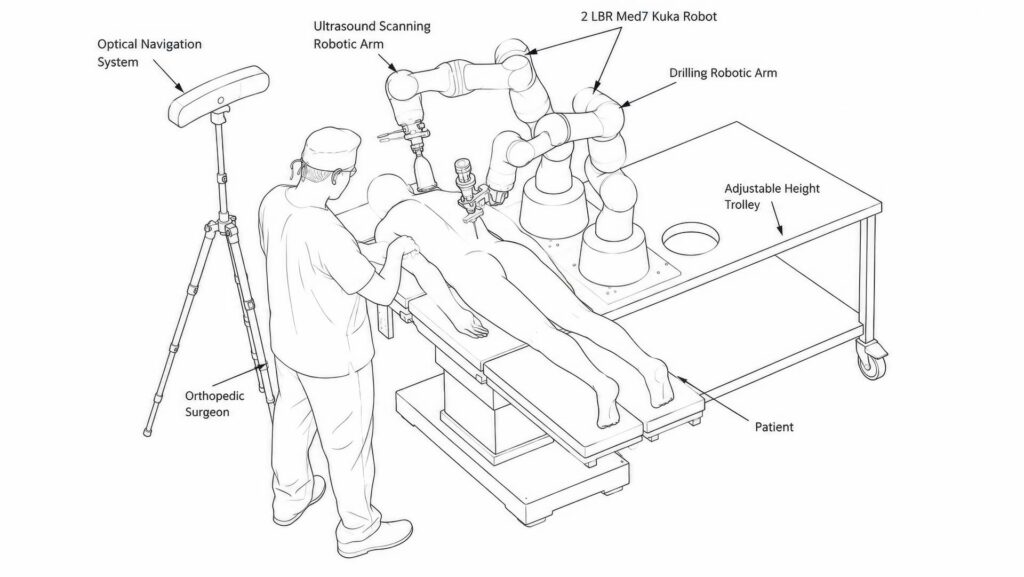
Diagram 1: Workflow Architecture of Team Ultratopia’s Robotic Spine Surgery System
Research Goals: Benefits for Surgeons and Patients
ULTRATOPIA aims to improve outcomes for both patients and clinicians.
For patients:
- Smaller incisions and minimally invasive access
- Reduced pain and faster recovery
- Shorter hospital stays (estimated 33% cost reduction vs. open surgery)
For surgeons:
- Zero radiation exposure; no lead apron or orthopedic strain
- Lower physical fatigue during procedures
- Robotic assistance for more consistent and precise execution
Importantly, the system is built around shared human–robot control, ensuring that the surgeon remains fully in charge of decision-making at every stage.
Every year, thousands of spine surgeons suffer orthopedic injuries from wearing lead aprons. Our goal was simple: protect the patient and protect the surgeon. With ULTRATOPIA, no one in the operating room is exposed to radiation — and the screws go in more accurately than ever.”
Ayob Davoodi
PhD Candidate, KU Leuven
A Partnership That Enables Surgical Innovation
The success of Team Ultratopia at the 2025 KUKA Innovation Award serves as a powerful proof of concept for the future of spinal surgery. It demonstrates the transformative potential of integrating advanced dual-arm robotics (KUKA LBR Med) and AI-driven ultrasound interpretation with the proven precision of NDI optical tracking.
From Lab Validation to Clinical Reality
As Ultratopia transitions from preclinical evaluation toward real-world clinical application, the NDI Polaris® family provides the essential foundation of accuracy and reliability. By achieving millimeter-level geometric precision and high placement success rates in dynamic environments, the platform is poised to redefine the surgical workflow.
The synergy of these technologies, robotics, artificial intelligence, and optical tracking, enables a new era of surgery that may be:
- Radiation-Free: Protecting the long-term health of patients and clinicians.
- Minimally Invasive: Prioritizing patient recovery and surgical outcomes.
- Spatial awareness: Integrating real-time coordinate data to achieve sub-millimeter precision consistently.
Through this partnership, Team Ultratopia and NDI are not just improving surgical tools; they are setting a new benchmark for safety and excellence in the operating room.
Disclaimers
Testimonials in this case study reflect the speakers’ experience with the ULTRATOPIA research platform incorporating NDI tracking components. Outcomes are determined by the research system design, integration choices, and clinical protocol, not by NDI components in isolation
The Polaris Vega® VT is a general metrology product and is not approved, cleared, or developed for medical use. Suitability of this product in a particular application must be determined by the OEM customer or the end user. Clinical applications shown are representative OEM integrations completed by Team ULTRATOPIA. NDI Passive Spheres are FDA-regulated medical devices.